
Unlocking the hidden value of marine by-products
Rasmus Ree and Gro Bjerga, NORCE Research
FTA Issue No.2 2026
Marine by-products from fish processing are rich in valuable nutrients, yet are largely used for low-value purposes.
A major challenge is the development of fishy off-odours, which limits other uses. New biotechnological approaches offer ways to control and upgrade these resources into high-quality proteins for human consumption.
This article can be downloaded as a PDF at the Fjell Tech agenda homepage - Download center.
Norway is one of the world’s leading seafood nations (Figure 1). In 2024, Norwegian fisheries and aquaculture produced more than 3.2 million tons of seafood (1). Value creation in the seafood industry amounted to NOK 69 billion in 2024, and NOK 139 billion when spillover effects are included (2), accounting for 2% of Norwegian GDP. As the world’s largest producer and exporter of farmed Atlantic salmon and rainbow trout, Norway has a particular responsibility to ensure that its production contributes to a sustainable global food system. However, these impressive production figures represent, quite literally, only about two thirds of the story.
Turning marine by-products into a national strategic resource
During fish processing, heads, backbones, skins, and trimmings are separated as so-called by-products. In Norwegian salmon processing, these can account for up to 40% of the total biomass. In 2024, more than 1 million tons of such material were generated (1). Although these resources are rich in valuable nutrients, their economic value remains relatively limited, with total revenue estimated at around NOK 3 billion (1).
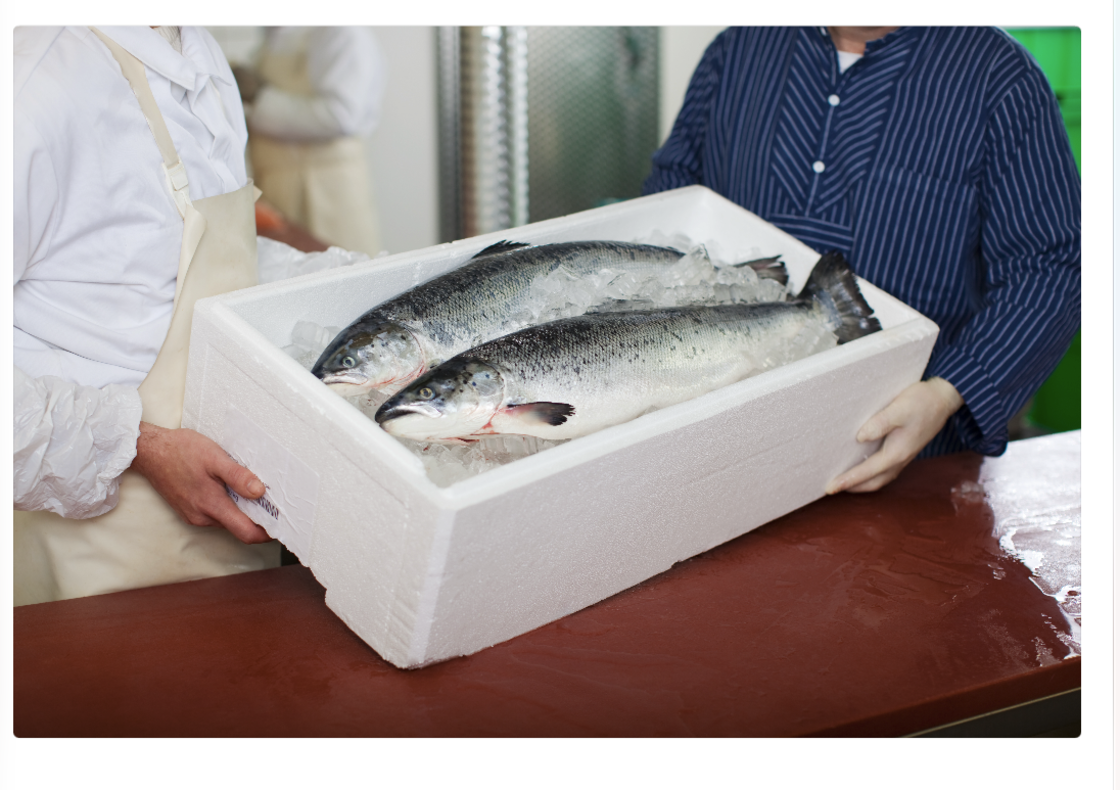
Figure 1: Norway is the world’s biggest producer of farmed Atlantic salmon and rainbow trout. Photo credits: Katrine Jaklin, NORCE.

About 65 percent of farmed salmon leaves the country without further processing, mainly due to high EU tariffs on processed products and the high cost of labour (Figure 2). Meanwhile, Norway relies heavily on imported protein ingredients, especially for fish feed, where there has been a shift from marine proteins to plant- and landbased sources driven by costs, availability and sustainability considerations. This creates a structural imbalance: while we export valuable marine nutrients or downgrade them to low value uses, we also depend on protein imports.
If the necessary conditions are put in place, the seafood industry can play a bigger role in the Norwegian economy in the years ahead, not least as part of the green transition: It may have economic, ethical, environmental, and climate benefits (3).
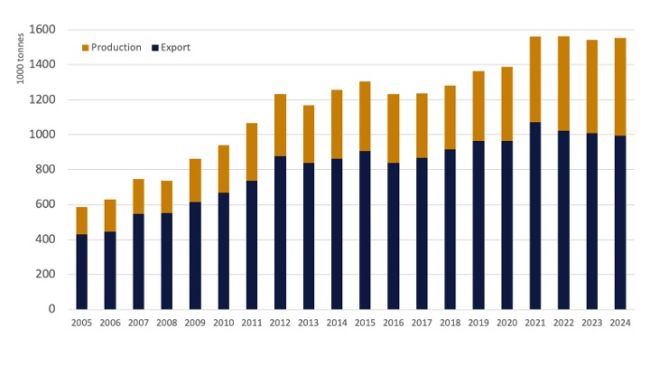
Figure 2. Production and export of farmed salmon the last 20 years presented in volume (metric tonnes). Data sources: The Directorate of Fisheries and Statistics Norway.
Maximizing the value of marine by-products
Today, about two-thirds of Norwegian marine by-products are used in production of oils, protein and meal for feed applications (Figure 3). Roughly one-fifth is used as feedstock in energy production (1). According to the value pyramid framework, resources should be prioritized for the highest value purposes (4). Products intended for human consumption, such as protein powders, dietary supplements, and functional foods, are at the top of the pyramid because they deliver greater nutritional benefits and significantly higher economic returns than lower value uses like energy recovery or disposal.
Using all parts of the fish more efficiently is one of the most powerful ways to improve sustainability in the seafood sector (5). Turning underused raw materials into valuable food ingredients can reduce waste, strengthen food security, and lower dependence on imported resources. Moreover, it helps build new businesses and value chains and contributes to local jobs. From a broader perspective, ensuring that valuable nutrients stay in the food system supports climate goals (6).
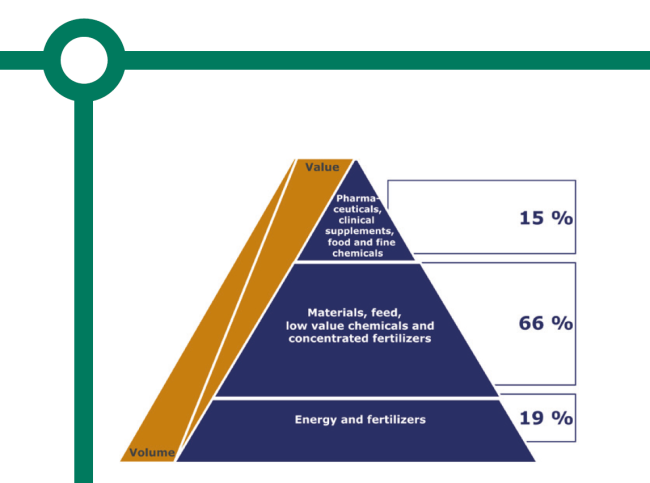
Figure 3. The value pyramid for marine by-products showing how volume and economic value are distributed across different applications with market data from (1). The figure is drawn by Bjerga to an approximate scale, with design inspired by (7,8).
Upgrading by-products to premium proteins
One promising way to unlock this value is through a process known as enzymatic treatment. Enzymes are catalysts found in all living organisms that speed up specific reactions in a gentle and controlled way, without the need for harsh chemicals or extreme conditions. Once minced, fish trimmings are mixed with water and gently heated together with enzymes, in a process called hydrolysis (9). Over about an hour, the enzymes break large protein molecules into smaller building blocks of peptides and amino acids.
Once the desired degree of hydrolysis is reached, higher temperatures are used to deactivates the enzyme and stop the reaction. The mixture is then separated into oil, solid material, and a liquid protein-rich fraction, which can be dried into a powder. Today, Norway has several advanced biorefineries based on this technology.
The main protein product of this process is known as fish protein hydrolysate. It contains typically above 70 percent protein, including all essential amino acids (10). Because the proteins are already broken down into small pieces, they are easily absorbed by the intestines. This makes them particularly suitable for people with increased nutritional needs, such as elderly people, people recovering from illness, or physically active individuals who benefit from fast protein uptake.
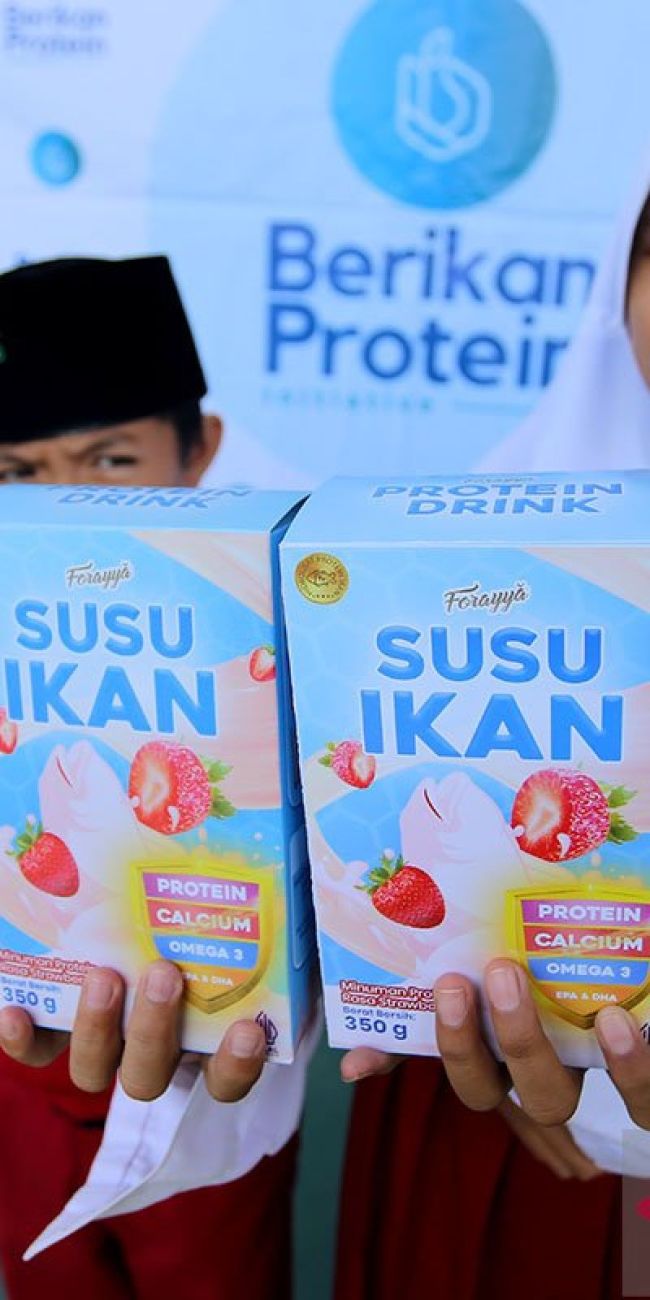
Figure 4. Illustration of fish protein-based “milk” products derived from marine by-products. The example shown is produced by the Indonesian company Forayya, where locally sourced fish protein hydrolysate is reconstituted into a beverage. Photo credits: Dedhez Angara.

The relevance of such products is increasingly being recognised beyond niche or medical nutrition markets. In 2024, Indonesian president-elect Prabowo Subianto drew attention during the election campaign by proposing to replace cow’s milk with so-called fish milk in the national free school lunch programme – essentially a drink made from fish protein hydrolysate (11) (Figure 4).
Despite the recognition, fish protein hydrolysates are often used in non-food applications. Most of the product is sold to pet food producers and, to some extent, used in fish feed (1). This trend reflects both market dynamics and consumer preferences, with the main bottleneck for food applications being sensory quality (1,12).
«Smells like fish»
In sensory terms, fishy odours range from clean oceanlike, and slightly salty notes to grassy or seaweed-like nuances, which at low levels are often perceived as pleasant notes in fresh fish and seafood (13). These aromas are typically linked to volatile compounds that develop naturally in marine organisms. Problems arise when the smell becomes strong, sharp, or ammonia-like, which signals spoilage and chemical breakdown. Out of balance, fishy notes can indicate poor quality. However, the full mechanisms underlying fishy smell formation are not yet fully understood.
One of the key factors of fish odour is a compound that forms naturally in fish after harvest. This is a small molecule called trimethylamine (in short: TMA) (1,12). TMA has an extremely low odour threshold (14), which means that even at very low levels our noses can detect it. By itself, it has a somewhat ammonia- and crab-like smell. In hydrolysates TMA becomes concentrated, as it is water soluble. Over the past five years, research has begun to address sensory issues caused by TMA.

Fixing the symptoms, not the cause
Masking is common in industry. Adding sugar during processing promotes the Maillard reaction, which provides a sweet notes and grilled odour. This was shown to mask the perception of fishy smell (16). Mixing in tea polyphenols likewise shows promise (17). At the same time, flavour masking can present its own challenges. Although President Subianto’s election campaign was successful and his plan to introduce free school lunches was widely supported, the suggestion of fish milk drew criticism for being strange and unappealing. Much of the reaction appeared to stem from the use of familiar flavours such as chocolate and strawberry to disguise the product’s fish-based origin. The inclusion of flavour-masking additives, including large amounts of sugar, could reasonably be seen as compromising the otherwise clear nutritional benefits of the fish-derived proteins.
Some biorefineries have installed advanced filtration methods to remove TMA. This is an untargeted method which is known in scientific literature and industry to reduce the fishy smell. This method has the drawback of causing significant protein loss and altering the nutritional composition of the hydrolysate (15). Using nanofiltration, the perception of another undesirable attribute, bitterness, has been shown to increase. This is likely due to the retention of peptides known to contribute to bitter taste, yet another undesirable taste attribute. Consequently, other strategies beyond untargeted methods are being investigated.
“You are what you eat”
Chemically speaking, TMA is a volatile amine which is formed postmortem from trimethylamine-N-oxide (TMAO), a naturally occurring metabolite in fish. The physiological role of TMAO is to act as an osmolyte, a small molecule that works to stabilize proteins and helps the cells cope with stress. TMA levels in raw materials vary depending on species, tissue, and processing (18). As a rule of thumb: the deeper the fish lives, with more pressure stress, the higher the TMAO levels are.
The food you digest releases volatile compounds that travel through your bloodstream, exit your pores as sweat or are exhaled by your lungs, often altering your natural body odour. Do people with seafood diet smell like TMA?
Not always. After eating seafood, an enzyme in our liver turns TMA into the odourless TMAO. This is also one of the reasons why individuals don’t smell fishy after a seafood meal. At least most don’t.

Figure 5. This watercolour illustration, "The Tempest, Act II, Scene 2: Caliban, Stephano and Trinculo on the seashore", by German artist Johann Heinrich Ramberg, portrays Caliban (right) as a hunched and deformed figure. While retaining human proportions, he is given amphibian, fish-like features that reflect his hybrid and monstrous nature. A dead fish lies on the shore beside the characters, visually reinforcing the “fishy” association described in the play and echoing the link between marine origin and odour.
Image credit: Folger Shakespeare Library.
From Shakespeare to science: Clues to a solution
In The Tempest, Shakespeare made the jester Trinculo examine Caliban and remark: «What have we here? A man or a fish? A fish: he smells like a fish; a very ancient and fish-like smell”. Caliban is the half-human offspring of a sea witch (Figure 5), suggesting the reason he should have such a marine scent, and leaving the molecular explanation of this phenomenon to modern geneticists. Caliban could, like Paul Giamatti’s character Paul Hunham in The Holdovers, suffer from fish odour syndrome, a rare metabolic condition in which the body cannot convert TMA and instead excretes it in sweat and urine. The patients lack the liver enzyme which oxidizes TMA to TMAO.
For Caliban’s and Hunham’s part, their fishy body odour contributes to and is symbolic of their detachedness and alienation from other people. For researchers, the cause and symptom of this rare genetic syndrome yield a clue to a solution to the problem of fish-smelling byproducts. Could we use such an enzyme to remove this smell in fish protein hydrolysates?
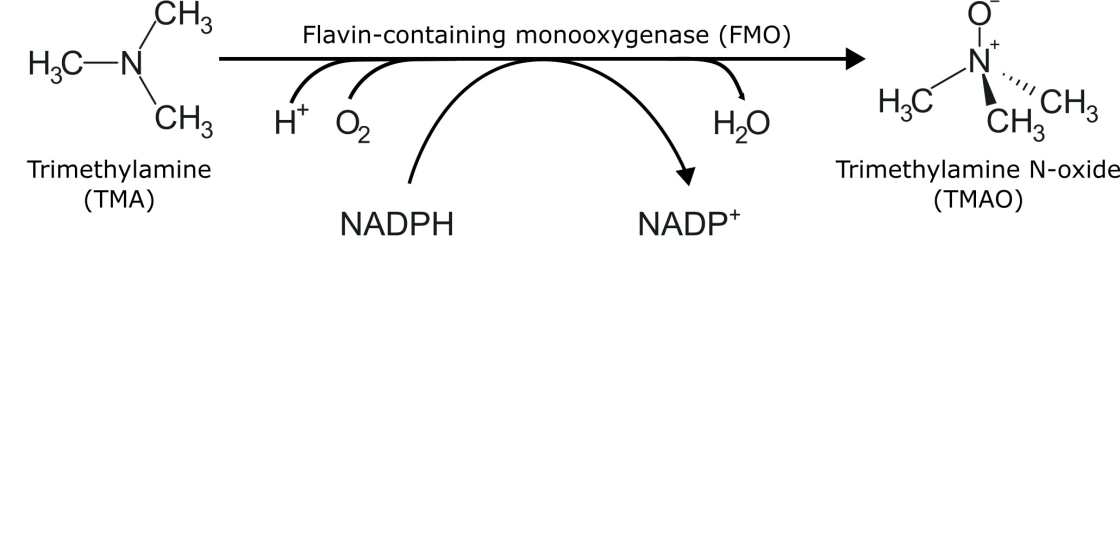
Figure 6. Schematic illustration of the reaction where trimethylamine (TMA) is oxidized to the odourless trimethylamine N-oxide (TMAO) by flavin-containing monooxygenase (FMO), requiring reduction of NADPH to NADP⁺. Figure taken from (23).
Targeted strategies are underway
Unlike filtration and masking, enzymes have the wonderful property of being highly specific. We have shown that an enzyme from a marine bacteria, which is very similar to our liver enzyme mentioned earlier, can be used to remove TMA from fish protein hydrolysates made from salmon (19). The enzyme basically reverts TMA back to the odourless TMAO (Figure 6). The enzyme oxidizes TMA using molecular oxygen and the NADPH molecule as a helper, leaving TMAO and the oxidized cofactor NADP+ as products (20,21).
Since this enzyme is of marine origin, it is adapted to relatively cold sea temperatures. However, biorefineries depend on moderate temperatures to run the hydrolysis process. Therefore, to improve the compatibility with industrial conditions, we made a new version of the enzyme that was able to cope with higher temperatures (22). Through protein engineering, targeted changes were introduced in the enzyme’s structure to enhance its stability at higher temperatures (Figure 7).
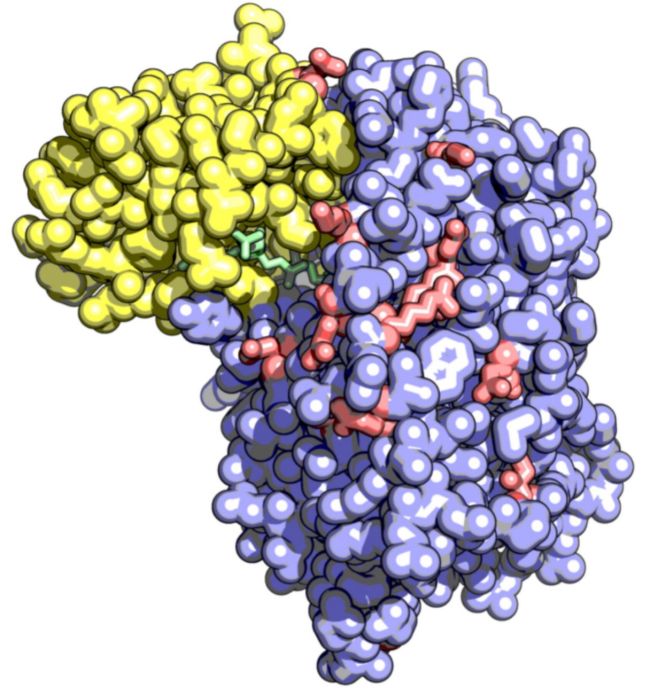
Figure 7. Model of the enzyme which has been adapted to higher temperatures. The green molecule is the expensive cofactor or helper molecule NADPH which is essential for the enzyme to work. The structure of the enzyme is available at the protein databank (ID: 8B2D). Figure by Ree.
But it did not solve all issues. The helper molecule, NADPH, is very expensive. Enzyme-assisted removal of TMA in fish protein hydrolysates will not be industrially viable unless cofactor consumption is managed in a cost-effective manner. We therefore developed a system to recycle this helper molecule, so we would not need as much of it. The recycling part is handled by another type of enzyme, which makes NADPH from a cheaper molecule, NADP+. By combining these two enzymes, we were able to remove TMA from fish protein hydrolysates without spending a fortune on NADPH (23). Next, we needed to understand if the reduction in TMA levels we observed translated to a more appealing smell. An exceptionally welltrained panel of sensory experts were hired to sniff our samples. The sensory panel was able to detect a reduction in TMA levels compared to non-treated samples, proving to us that the method works.

Thinking ahead
Although the enzyme system developed in this study is not yet ready for industrial implementation, it clearly demonstrates what targeted biotechnological solutions can offer. Enzymes can address specific quality challenges in a way that untargeted methods cannot. At the same time, the work highlights important trade-offs. Enzymes are precise but complex, and cost remains a key barrier. For now, preventive measures such as using fresh raw material, along with filtration and flavour masking, are likely to remain the most practical industrial solutions. Still, the enzymatic strategy illustrates a powerful concept: that carefully designed biological tools can open new pathways for upgrading underutilised marine resources.
Looking forward, further development in enzyme engineering and process integration could gradually make such approaches more accessible. Even if enzymes are not always the final answer, they help point the way. In a sector like Norway’s marine industry, rich in raw materials, expertise, and innovation, this kind of targeted thinking may prove essential for creating new, higher-value products from resources we already have. What once smelled like a problem may ultimately help unlock new value.
The authors acknowledge funding from the Research Council of Norway through the Centre for Research-based Innovation in Industrial Biotechnology (SFI-IB, project no. 309558).
References
1. Myhre MS, Richardsen R, Strandheim G, Nystøyl R. Analyse marint restråstoff 2024 [Internet]. Trondheim: SINTEF Ocean; 2025 Jun [cited 2025 Nov 26]. p.1–33. Report 2025:00517. Available from: https://hdl.handle.net/11250/5481440
2. Nyrud T, Iversen A, Bendiksen BI, Robertsen R, Steinsbø S, Jensen HS. Sjømatnæringens ringvirkninger. Verdiskaping og ringvirkninger fra norsk sjømatnæring for 2024 [Åpen]. Nofima; 2025 Nov. p. 78. Åpen Rapport 36/2025.
3. Tveiterås K (red. ). Grønn verdiskapingog økt bearbeiding i sjømatindustrien. Næring- og Fiskeridepartementet; 2022 Mar. p. 1–111. Report W-0041 B.
4. BioDigSirk sluttrapport. Konsept- og planleggingsfase. [Internet]. Brønnøysundregistrene; 2022 Sep. p. 1–100. Available from: https://www.regjeringen.no/no/dokumenter/biodigsirk/id2959778/
5. Myhr AI, Herheim C, Opsahl E, Helland E, Dahle ES, Provan F, et al. Utredning av sirkulærøkonomien i sjømatnæringen [Åpen]. NORCE; 2023 Sep. p. 87. Åpen no.: 7/2023. Located at: rest. Available from: https://www.norceresearch.no/assets/images/file/Veikart_Sirksj%C3%B8.pdf?v=1698153764
6. Intergovernmental Panel On Climate Change. Climate Change and Land: IPCC Special Report on Climate Change, Desertification, Land Degradation, Sustainable Land Management, Food Security, and Greenhouse Gas Fluxes in Terrestrial Ecosystems [Internet]. 1st ed. Cambridge University Press; 2022 [cited 2026 Apr 27]. Available from: https://www.cambridge.org/core/product/identifier/9781009157988/type/book doi:10.1017/9781009157988
7. Lange L, Lindedam J. The Fundamentals Of Bioeconomy The Biobased Society. United Federation of Danish Workers 3F; 2016 Dec. p. 21.
8. Brod E, Böpple H, Aarbakke A, Nyvoll S, Bjerga GEK. Sirkulær utnyttelse av organiske råvarer: Prosesser, produkter og rammer for anvendelse innen jordbruket [Internet]. NORCE Research; 2026 May. p. 61. Report nos.: 3–2026. Available from: https://hdl.handle.net/11250/5517027
9. Kristinsson HG, Rasco BA. Fish Protein Hydrolysates: Production, Biochemical, and Functional Properties. Crit Rev Food Sci Nutr. 2000 Jan;40(1):43–81. doi:10.1080/10408690091189266
10. Opheim M, Šližytė R, Sterten H, Provan F, Larssen E, Kjos NP. Hydrolysis of Atlantic salmon (Salmo salar) rest raw materials—Effect of raw material and processing on composition, nutritional value, and potential bioactive peptides in the hydrolysates. Process Biochem. 2015 Aug;50(8):1247–57. doi:10.1016/j.procbio.2015.04.017
11. Baharudin H. Fish milk instead of cow’s milk? Idea for Prabowo’s free lunch scheme creates a stir in Indonesia. The straits times [Internet]. 2024 Sep 13 [cited 2026 Apr 28]. Available from: https://www.straitstimes.com/asia/se-asia/fish-milk-instead-of-cow-smilk-idea-for-prabowo-s-free-lunchscheme-creates-a-stir-in-indonesia
12. Ramakrishna TRB, Aspevik T, Vang B, Lian K, Jacobsen C,Shapaval V, et al. Factors Influencing Undesirable Sensory Properties in Protein Hydrolysates and Remediation Strategies for Food Applications. J Food Sci. 2026 Apr;91(4):e71031.doi:10.1111/1750-3841.71031
13. Lindsay RC. Fish flavors. Food Rev Int. 1990 Jan;6(4):437–55.doi:10.1080/87559129009540886
14. Leonardos G, Kendall D, Barnard N. Odor Threshold Determinations of 53 Odorant Chemicals. J Air Pollut Control Assoc. 1969 Feb;19(2):91–5. doi:10.1080/00022470.1969.10466465
15. Steinsholm S, Oterhals Å, Thoresen L, Underhaug J, Kousoulaki K, Aspevik T. Reduction in flavorintense components in fish protein hydrolysates by membrane filtration. J Food Sci. 2021 Sep;86(9):3855–67.doi:10.1111/1750-3841.15855
16. Kouakou C, Bergé JP, Baron R, Lethuaut L, Prost C, Cardinal M. Odor Modification in Salmon Hydrolysates Using the Maillard Reaction. J Aquat Food Prod Technol. 2014 Sep 3;23(5):453–67. doi:10.1080/10498850.2012.724153
17. Chen D, Chen X, Chen H, Cai B, Wan P, Zhu X, et al. Identification of odor volatile compounds and deodorization of Paphia undulata enzymatic hydrolysate. J Ocean Univ China. 2016 Dec;15(6):1101–10. doi:10.1007/s11802-016-3166-7
18. Shumilina E, Slizyte R, Mozuraityte R, Dykyy A, Stein TA, Dikiy A. Quality changes of salmon by-products during storage: Assessment and Quantification by NMR. Food Chem. 2016;211:803–11.doi:10.1016/j.foodchem.2016.05.088
19. Goris M, Puntervoll P, Rojo D, Claussen J, Larsen Ø, Garcia-Moyano A, et al. Use of Flavin-Containing Monooxygenases for Conversion of Trimethylamine in Salmon Protein Hydrolysates. Appl Environ Microbiol. 2020 Nov 24;86(24):e02105-20. doi:10.1128/AEM.02105-20
20. Alfieri A, Malito E, Orru R, Fraaije MW, Mattevi A. Revealing the moonlighting role of NADP in the structure of a flavin-containing monooxygenase. Proc Natl Acad Sci. 2008 May 6;105(18):6572–7. doi:10.1073/pnas.0800859105
21. Chen Y, Patel NA, Crombie A, Scrivens JH, Murrell JC. Bacterial flavin-containing monooxygenase is trimethylamine monooxygenase. Proc Natl Acad Sci. 2011 Oct 25;108(43):17791–6. doi:10.1073/pnas.1112928108
22. Goris M, Cea-Rama I, Puntervoll P, Ree R, Almendral D, Sanz-Aparicio J, et
al. Increased Thermostability of an Engineered Flavin-Containing Monooxygenase to Remediate Trimethylamine in Fish Protein Hydrolysates. Lotti M, editor. Appl Environ Microbiol. 2023 Jun 28;89(6):e00390-23. doi:10.1128/aem.00390-23
23. Ree R, Larsen Ø, Gaykawad S, Ramanand SS, García-Moyano A, Chiriac IE, et al. Monooxygenase-dehydrogenase cascade for sustained enzymatic remediation of TMA in salmon protein hydrolysates. Atomi H, editor. Appl Environ Microbiol. 2026 Mar 18;92(3):e01242-25. doi:10.1128/aem.01242-25
Fjell Tech Agenda is a publication by Fjell Technology Group aimed at sharing knowledge with customers, partners, and stakeholders. Its purpose is to present complex topics in a clear and accessible format for non-experts. The publication is not intended to promote Fjell Technology Group’s products or services. All content reflects the views and insights of the individual author, and Fjell Technology Group does not assume responsibility for the opinions expressed.
Suggestions for future topics are welcome at post@fjelltg.com.
Happy reading!
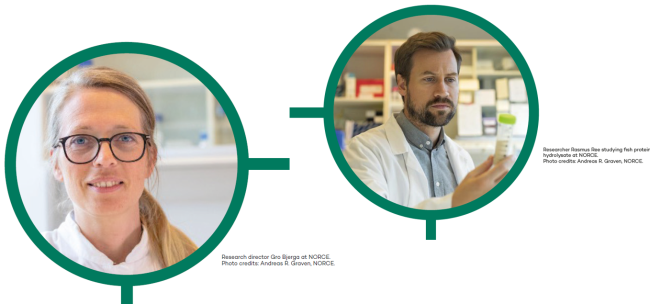
Authors Gro Bjerga (Research director in marine biotechnology) and Rasmus Ree, PhD (Researcher in marine biotechnology) at Norce
Gro Bjerga specializes in enzyme-based solutions for valorising aquaculture side streams, including residual raw materials and sludge. Rasmus Ree is an expert in proteomics and metabolomics, with a strong background in molecular biology